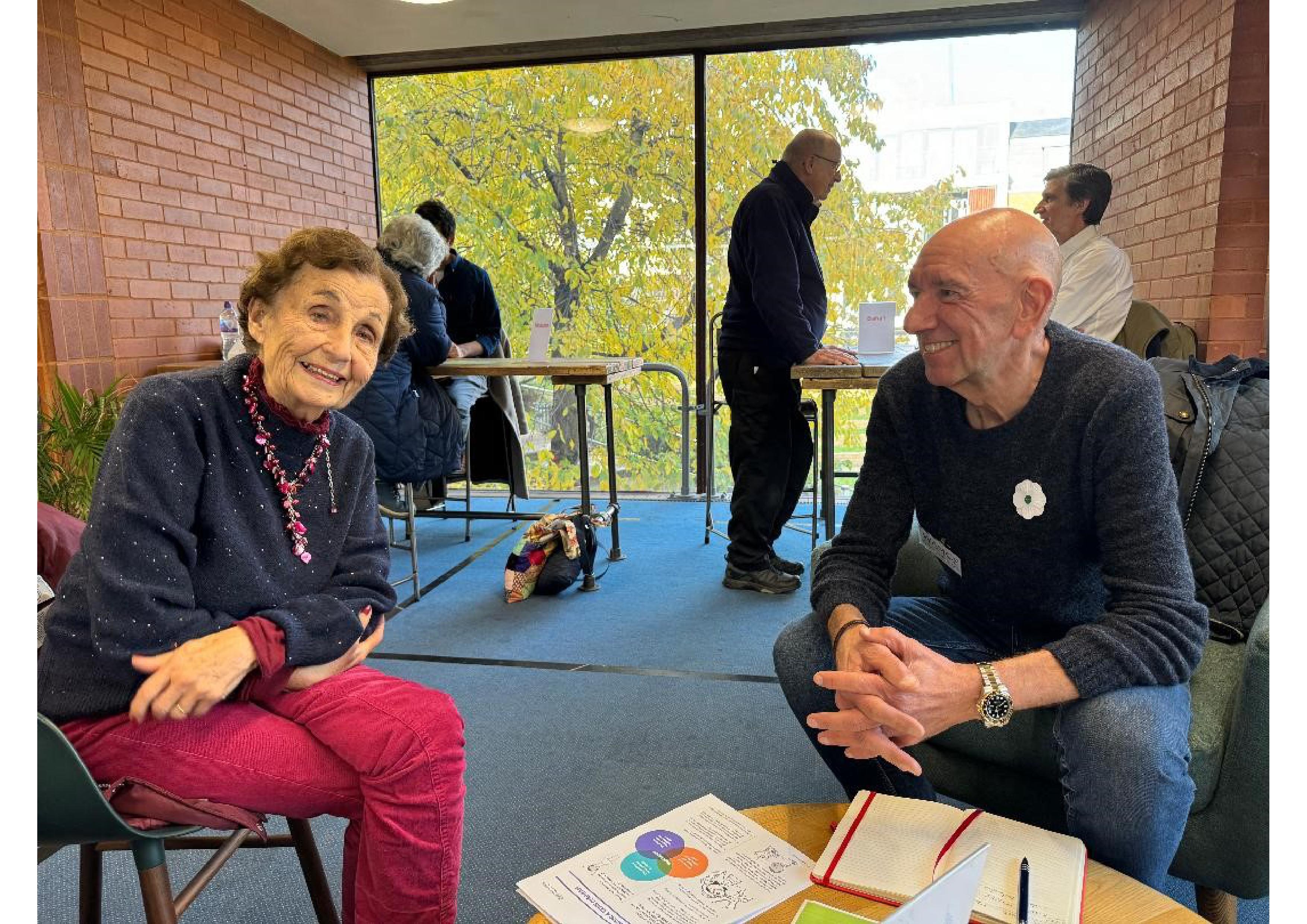
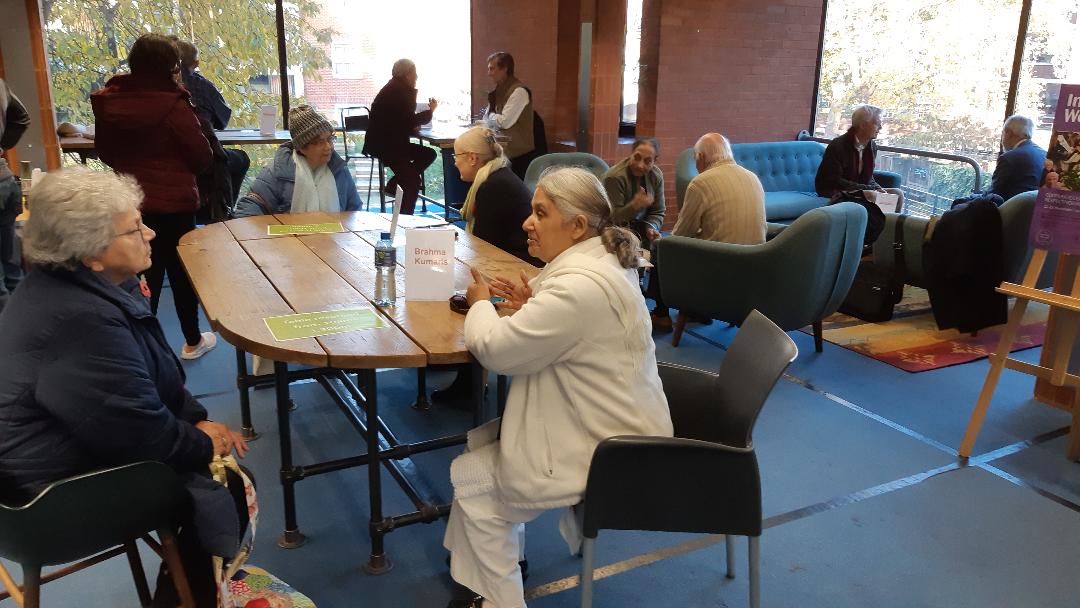
As part of the WAMCF Interfaith team, I helped to organize a ‘Living Library’ event for the Windsor & Maidenhead Interfaith Group. There are nine diffrent faiths/belief in the group: Baháʼí, Brahma Kumaris, Buddhism, Christianity, Hinduism, Humanism, Islam, Judaism and Sikhism.
A ‘Living Library’ is a brilliant way to challenge prejudice and discrimination.
It works just like a normal library: visitors can browse the catalogue for the available titles, choose the Book they want to read, and borrow it for a limited period of time. After reading, they return the Book to the library and, if they want, they can borrow another. The only difference is that in the Living Library, Books are people, and reading consists of a conversation.
It can used wherever a group is facing discrimination be it gender, race, age, disability and so on.
The art of Living is a book by Frank Tallis in which he provides an overview of the history of psychotherapy.
He explains the following: ‘Joining an online support group can be comforting but even the most sympathetic internet chat rooms cannot compete with the power of eye contact, a familiar voice, responsive body language and the warmth of a solicitous hand.’
The Act of Living by Frank Tallis
The more we try to connect through tablets and smartphones, the more we are likely to experience the frustration of emotional needs, because the principal means by which human beings combat loneliness and maintain mental health is face-to-face communication.
A common defence of online interaction is that it provides a social outlet for those who find face-to-face communicating difficult; however, socialising online can easily become counter-productive. Anxious individuals rob themselves of opportunities to practice their social skills in ‘real-life’ situations – skills that could potentially facilitate the development of meaningful (and ultimately therapeutic) intimate relationships’.
By Emili Gregory June 9, 2021. Emily is the VP of product development at VitalSmarts
Since the COVID-19 pandemic began, many of us have discovered a new world (and yet another acronym) in WFH—work from home. Depending on your point of view, the WFH world has turned out good in some ways and bad in others—more time to be with your kids, or lots of noise and trying to figure out how to home-school. Or maybe it’s less time spent in rush hour traffic but now you are way behind on your podcast episodes.
Communication with co-workers has also been affected while we work from home. According to recent research from VitalSmarts, WFH communication over the past year has changed dramatically for everyone in at least one negative way: how likely we are to resolve conflicts with co-workers.
In an online survey of more than 1,100 respondents, people stated they are more than twice as likely to avoid speaking up about concerns with colleagues and managers virtually than when they worked together in person before the pandemic began. Top frustrations for remote employees include colleagues and managers not following through with commitments, making changes to projects unilaterally or without warning, and giving half-hearted commitment to their priorities.
When any of these or other problems arise, many of us have been using our newfound physical distance to stay emotionally distant as well. However, these silos of silence can lead to terrible consequences as the lag time between seeing a problem and saying something about it drags on. The most common of these issues listed by respondents included more stress, more time-wasting, lower morale, and lower productivity.
It’s easy to see how working from home affects employees and how this can translate into drags on organizational effectiveness. Speaking up and establishing a culture of openness and effective conversations is essential to ensuring employees feel able to address and solve individual, cultural, and organizational challenges.
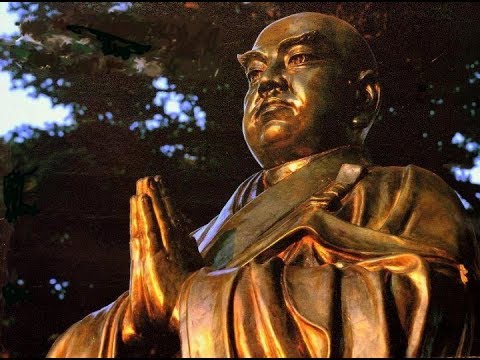
The Buddhist leader, the Dalai Lama, has said that, ‘My religion is kindness’. I practice a different type of Buddhism within the Soka Gakkai International. It’s based on the teachings of Nichiren Daishonin. I would encapsulate its spirit in a similar way, ‘It is the heart that is important’.
Nichiren Daishonin “It is the heart that is important”
From a practical point of view, we exercise our hearts through encouraging others, as expressed in this beautiful quote from Daisaku Ikeda:
“Just as a spring breeze awakens tender new shoots of green, sincere encouragement can thaw a frozen heart and instil courage. It is the most powerful means to rejuvenate the human spirit.”
Imagine being in an environment where all those around you were sincerely encouraging and supporting you. I’ve been in such an environment on week-long Buddhist courses. By the end of the week most people have chanted hours and hours to transform their inner negativity. Their lives are wide-open, and most people are making significant effort to embrace and encourage each other. This is how life can be.
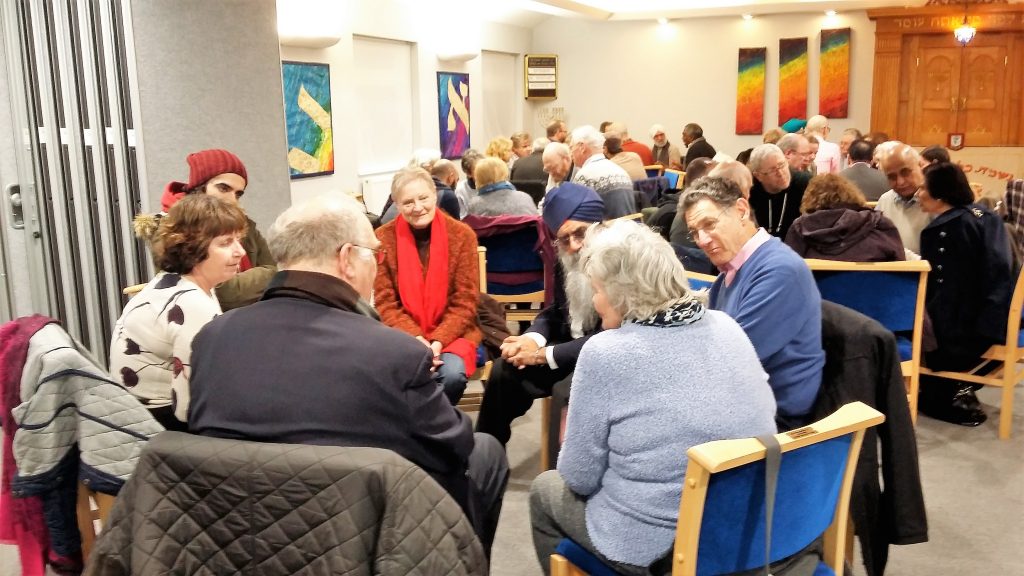
One of my greatest joys is watching a group experiencing dialogue for the first time.
To most people ‘Dialogue’ is just conversation. But it is so much more. It is actively building respect with another person. Listening without judging and sharing sincerely what is in our hearts.
As such, people are often connecting at a deeper level, where they are at their most human. In organised Dialogue meetings, you can almost see visible relief as participants are encouraged to let go of their identification with their ego and its predominantly narrow and self-focused agenda.
Writers are encouraged to ‘kill their darlings’. Letting go of the lines or characters they are emotionally attached to and love the most. Rather than trying to find a way to force them into their story they let them go for the sake of the text as whole.
Dialogue can work in the same way. By letting go of our cherished beliefs and viewpoints we can allow the dialogue to flow more fully. That is not to say we need to hold back on sharing our deepest feelings. But to be more conscious of how so many of our beliefs and attitudes have become entrenched over the years, have become our ‘darlings’.
The best way to enter a dialogue is with the intention of being open and listening deeply to another. Asking questions that help us understand contrary points of view or perspectives. This is in contract with debate or even ‘regular’ conversation which so often focuses on ‘winning’ and looking for weaknesses.
In these times of great change where innovative and creative solutions are so much in demand, dialogue offers a way forward because it draws out the best of us, both individually and collectively.


 The Power of Dialogue